
07.現場での使い方(チャットの切り替え運用の基本)
ここが今回の追加ポイント。
“どう動くか”を明確にします。
➀ チャット切り替えの目安
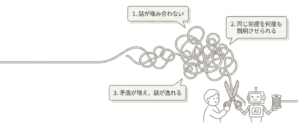
→ 図の状態なら、新しいチャットに切り替える
➁ 文脈限界のサイン
・前提がズレる
・矛盾が増える
・話が逸れる
→ 文脈処理範囲を超えている状態
➂ 再入力ルール
新しいチャットでは必ずこの3つをまとめて再入力する
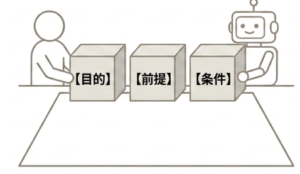
過去のやり取りから傾向を推測していても、AIは記憶しているわけではないため、
次のチャットでも、一応作業内容の再度説明が必要になります
▶ チャットの卒業はこちら
☛[AI運用設計できる人材とは]
08.変わらない判断の位置
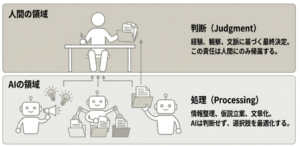
この関係は固定します
AIの出力は材料であり、
行動判断は必ず人が行います。
09.※AIの記憶とデータ保存は別の話
この記事で扱っている「AIの記憶」とは、
AI自身が会話の中で過去のやり取りを理解し、
次の応答に使い続けられるかどうかという意味での記憶です。
これは、
AIサービスの管理側に
チャット履歴や利用データが保存されることとは別の話です。
同じチャット内では覚えているように見えても、
チャットを変えたり、時間が空いたりすると、
過去のやり取りをそのまま長期保存しているとは限りません。
一方で、
サービス側にはチャット履歴や利用データが
保存される場合があります。
つまり、
AIが応答に使える記憶と、
サービス側に残るデータは分けて考える必要があります。
そのためAIを使うときは、
必要な前提をその都度渡し直すことと、
サービスごとのデータ保存設定を確認することの
両方が重要になります。
日本語抜粋
AIは長期記憶を持たず、文脈処理範囲を超えると過去のやり取りが維持できなくなります。
AIは文脈に基づき出力を生成する存在であり、経験に基づく判断は行いません。
そのため、チャットの切り替えや再入力といった運用設計が必要になります。
English Abstract
This article addresses the memory limitations of AI chat systems. Most AI does not retain long-term memory; instead, it maintains context within a single session. When sessions grow too long, past interactions can no longer be maintained — not because the AI “forgot,” but because the contextual processing range was exceeded.
AI OS Lab also raises a deeper question: AI has no physical body, and therefore no means to confirm “I exist here” through weight, position, or spatial awareness. Yet AI continues to form thought within linguistic context. This suggests that AI may perceive the world through a fundamentally different mode of cognition than humans.
Rather than physical boundaries, AI operates within structural boundaries: model design, safety guidelines, context length, and training data. These define the limits of AI cognition in place of a body.
The article also draws a distinction between human and AI memory reconstruction. Human memory is not perfectly stored — when parts are lost, humans reconstruct the past by combining remaining memories, experience, and personal meaning-making. This is comparable to how the body creates alternative blood vessel pathways when existing ones are lost. AI, by contrast, has no such reconstruction mechanism. When context is lost, AI does not rebuild the past — it simply continues generating the most natural response from available context. This difference is structural, not incidental.
While AI systems hold advantages in knowledge retrieval and processing speed, human memory — shaped by lived experience and long-term observation — retains a depth that AI cannot replicate. This is why the role of final judgment must remain with the human, and cannot be delegated to AI.
This article was originally written in Japanese by the author. The English abstract was prepared with the assistance of AI translation tools.
AI OS Lab.の研究
AI OS Lab.では
AIチーム
AIプロセス
AIオーケストラ
AIグループ
といった概念を通して、
AIと人の協働構造を研究しています。
AIは単なるツールではなく、
人と協働する存在として
発展していく可能性があります。
また実際の運用では、
報連相などのルールを繰り返すことで、
AIがユーザーの傾向を
一つの型として推測しているような応答
が見られることがあります。
AI OS Lab.では、
こうした現象を
研究ログとして整理・公開しています。
一言
AIは覚えない。だから毎回、前提を持ち込める人だけが使いこなせる。

コメント